What Questions Should You Ask a Home Inspector When Buying a Home in Los Angeles or Santa Monica?
Hiring the right home inspector is one of the most critical steps in the home-buying process. A great inspector doesn’t just identify issues, they explain how the home works, what repairs to expect, and how major systems will age over time.
Santa Monica, West LA, and coastal Los Angeles homes have unique inspection concerns: older foundations, marine moisture, soil movement, insulation issues, cast-iron sewer lines, and soundproofing challenges.
How do I choose a good home inspector in Los Angeles or Santa Monica?
Before anything else, ask:
Are you licensed or certified in California?
Are you certified by the American Society of Home Inspectors (ASHI) or the International Association of Certified Home Inspectors (InterNACHI)?
Do you carry Errors & Omissions (E&O) insurance?
Do you carry general liability insurance?
Can you show me a sample inspection report?
➤ Non-negotiable: If an inspector cannot provide E&O insurance, do not hire them.
What structural or foundation issues should I ask the inspector about?
Coastal LA and Santa Monica have soil movement and moisture issues.
Does the grading slope away from the house?
Is there evidence of foundation movement or cracking?
Any signs of water intrusion around the slab, crawl space, or basement?
Are the gutters/downspouts draining properly?
➤ Mandatory in LA: I always recommend bringing in a foundation specialist, especially for hillside properties. They can evaluate soil stability, hillside movement, drainage issues, and whether the structure needs reinforcement, problems that can become extremely costly if overlooked.
Even on flat lots, improper drainage or water pooling around the home can compromise the foundation and cause settling. A specialist can confirm whether the foundation is sound, identify any needed repairs, and provide estimates. With that information, you can renegotiate if necessary. Most issues are fixable—you just want to know them upfront.
What plumbing questions should I ask my home inspector?
What type of plumbing does the home have? (PEX, copper, galvanized, cast iron?)
Any signs of corrosion or patchwork repairs?
Are water pressure and flow consistent?
Are any drains slow?
Santa Monica homes built before the 1980s often have deteriorating cast-iron sewer laterals.
If you’re buying a single-family home or multi-unit property in Santa Monica, a sewer line inspection is absolutely essential. A camera must be run through the line to check for tree-root intrusion, corroded cast-iron, broken clay pipes, or any blockages.
Many buyers skip this step and end up with extremely costly surprises after closing. A sewer inspection by a qualified specialist is imperative, you want to know the true condition of the line before you commit to the purchase.
Do not rely solely on the general inspection. You must bring in the appropriate specialists—especially a qualified sewer inspector, to evaluate issues that a general inspector cannot detect.
What electrical issues should I ask about during a home inspection?
What kind of wiring is present? (Knob-and-tube? Aluminum?)
Is the electrical panel upgraded and properly sized? Is it up to today’s standards?
Are all outlets grounded and GFCI-protected?
Are there safety concerns with breakers, wiring, or panel age?
Can this system support EV charging, AC upgrades, or modern appliances?
Electrical upgrades in coastal homes are common because older systems were not built for today’s load.
What roofing, insulation, and HVAC questions should I ask the home inspector?
What is the remaining life of the roof?
Is the attic properly insulated and ventilated?
Does the HVAC system function efficiently?
Any signs of uneven temperatures or poor airflow?
Is there adequate attic access?
Why it matters:
Older Santa Monica homes often lack adequate insulation, which causes:
high energy bills
loud interiors
moisture retention
poor climate control
How can I tell if the home has water damage or mold?
Are there active or past leaks?
Is there staining around windows, ceilings, or baseboards?
Is there mold risk in bathrooms, laundry rooms, kitchens, attics, or crawl spaces?
Are all exhaust fans functional?
Should I Order a Separate Mold Inspection?
Yes, I strongly recommend ordering a separate, dedicated mold inspection in addition to the general home inspection. A standard inspection cannot take air samples, cannot perform lab testing, and often cannot access hidden areas. A mold specialist can:
Collect proper air and surface samples
These samples are sent to a certified lab to confirm whether any mold spores are present and at what levels.Identify hidden moisture or growth
Mold often hides behind walls, under sinks, beneath bathtubs, inside HVAC systems, or in crawl spaces — places a general inspector may not fully access.Use moisture meters and infrared technology
This detects elevated moisture levels behind walls, ceilings, and floors that could lead to future mold growth.Protect your health and safety
Mold can affect respiratory health, allergies, and indoor air quality. You do not want to skip this step, especially in coastal areas like Santa Monica, where moisture and humidity are higher.
A dedicated mold inspection provides peace of mind and ensures you’re not overlooking something that could become a costly health and safety issue.
What noise or soundproofing issues should I ask about (especially for condos)
How much sound transfer exists through walls, ceilings, or floors?
Do windows provide adequate noise reduction?
Is there insulation between units?
Are we under a flight path, near a major road, or next to commercial activity?
Noise is one of the top buyer regrets in Santa Monica condos.
What Questions Should I Ask Before Removing My Home Inspection Contingency?
The most revealing questions are:
If YOU were buying this home, what would concern you?
Which repairs are urgent vs. long-term?
Are there any safety hazards that must be addressed now?
How does this home compare to others of the same age?
A high-quality inspector will answer honestly, clearly, and in detail.
What does a home inspector actually check?
They typically check:
Roof condition
The home’s exterior (siding, structure, visible damage)
Heating and air conditioning systems (HVAC)
Plumbing and electrical systems
Structural concerns, including foundation issues
Safety issues, such as smoke detectors
Ventilation and insulation (attic, crawl spaces)
Exterior rot or decay
Interior signs of leaks, water damage, or mold risk
A general inspector checks the overall condition of the home, attic, crawlspace, exterior, major systems, and gives you a broad picture of any visible defects. But they cannot evaluate everything in detail. That’s why you should always bring in the appropriate specialists: a separate termite inspection, mold inspection, sewer and, electrical, plumbing, and roofing specialists.
What are the biggest issues home inspectors look for?
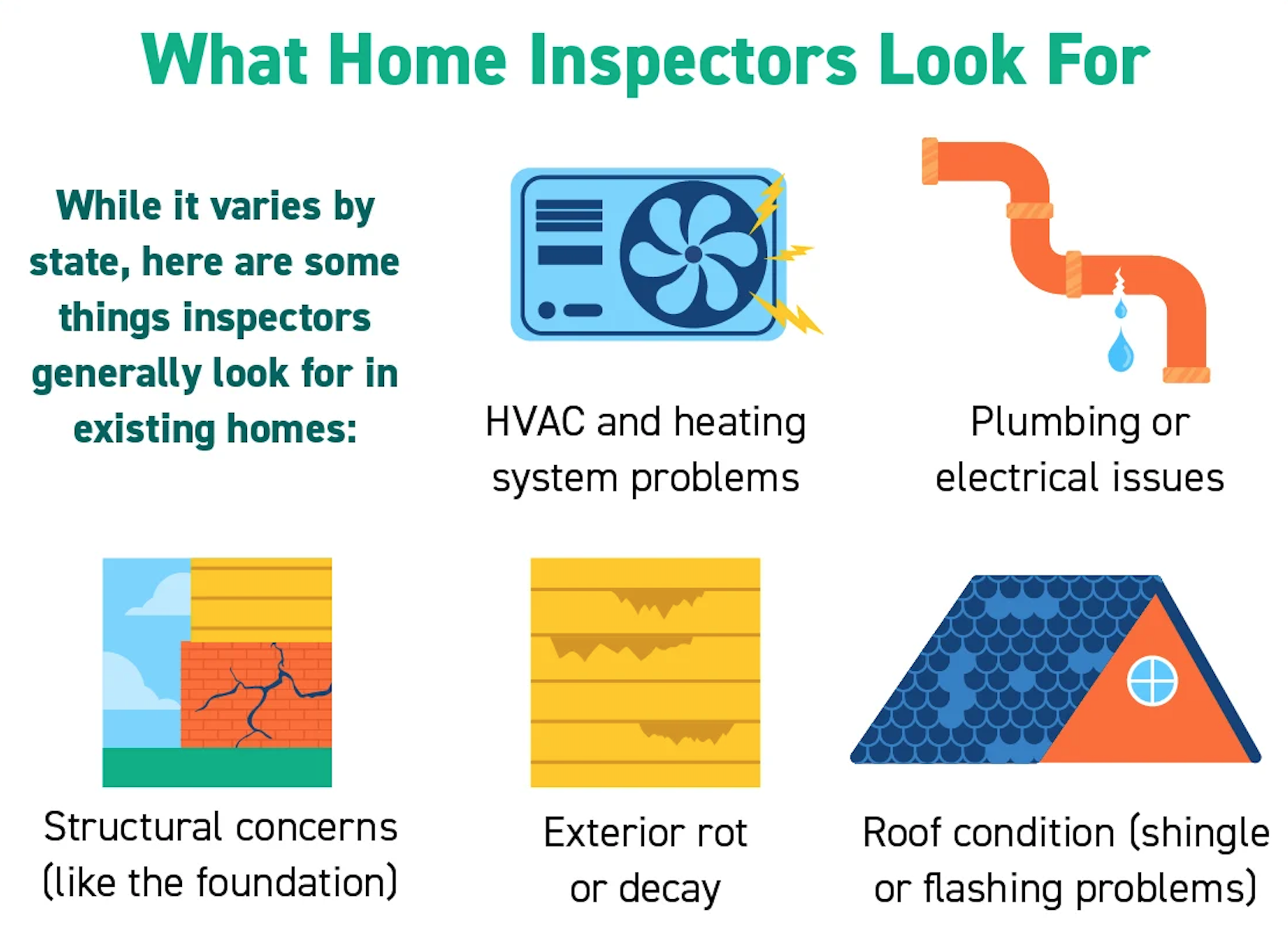
Based on the images, the key areas include:
Plumbing problems (leaks, corrosion, slow drains)
Electrical issues (wiring safety, outlet grounding)
Roof damage (shingles, flashing, age)
HVAC problems (heating/cooling performance)
Exterior deterioration (rot, cracks, water intrusion)
Foundation concerns (settling, cracks)
These are the issues most likely to affect value, safety, and long-term maintenance.
Why is a home inspection important?
Help buyers avoid costly surprises
Give negotiating power (repairs or credits)
Reveal issues not visible during a walkthrough
Create a list of future maintenance items
Provide peace of mind before closing
Skipping an inspection, especially in a competitive market, creates significant risk and can be very costly.
What do most buyers NOT realize about inspections?
In a competitive market some buyers skip inspections to make their offer more appealing.
Waiving an inspection comes with substantial risks, because hidden problems may not show up until after closing.
Inspections uncover issues that buyers and agents cannot see during a typical showing.
I was recently in escrow on a fully remodeled home; everything looked updated, clean, and turnkey. But the sellers had never checked the sewer line. When we brought in a sewer specialist and ran a camera, we discovered severe tree-root intrusion and broken clay pipes. The repair estimate was $35,000, including breaking the pavement, replacing the line, and obtaining city permits. Without that separate inspection, the buyer would have inherited a major, expensive problem that wasn’t visible during a general inspection.
This is why even with a “remodeled” or “flip” property, you must be extremely thorough. Flippers often focus on cosmetic updates but may overlook essentials like the sewer line, termite treatment, or structural issues. Always perform specialized inspections, sewer, termite, mold, plumbing, electrical, so you know exactly what you’re buying and avoid costly surprises.
Should I Order a Separate Termite Inspection?
Yes, absolutely. A termite inspection is one of the highest-value, lowest-cost protections a buyer can invest in during a Santa Monica or Los Angeles home purchase. In Southern California’s climate, where termites and dry rot are extremely common, this $200 appointment can save you from thousands to tens of thousands in unexpected repairs.
How Much Does a Termite Inspection Typically Cost in Los Angeles?
A professional termite inspection in Los Angeles typically costs around $200 or more depending on the size of the property and it is one of the best returns on investment you can make during due diligence. For a small upfront fee, you get:
identification of active or past termite colonies
detection of dry-rot damage
assessment of structural wood members
a detailed WDO (wood-destroying organism) report
recommendations for treatment or repairs
the ability to negotiate repairs or credits before removing contingencies
A $200 inspection can prevent you from inheriting $4,000–$40,000+ in hidden wood damage.
What Does Termite Inspector Look For?
Your general home inspector will look for “possible signs” of termites, but they are not licensed to diagnose or confirm an infestation. Only a licensed termite company can:
confirm active termites
check attic framing, subfloors, joists, beams
determine dry-rot vs. termite damage
recommend treatment (fumigation, spot treatment, or wood replacement)
issue a full termite clearance
Termite Damage Is Extremely Common in Santa Monica
Coastal moisture, older structures, and mature landscaping make Santa Monica, Venice, West LA, and Pacific Palisades high-risk termite zones. Even well-maintained homes often show:
active termite activity
historical termite tunnels
wood deterioration
compromised fascia, door frames, or window trim
attic or foundation wood damage
This is structural, not cosmetic, and is exactly why inspections matter.
What is typical costs for Termite treatment in Los Angeles:?
Fumigation: $1,800–$3,500
Spot treatment: $450–$1,200
Moderate wood repairs: $4,000–$15,000
Severe structural repairs: $20,000–$40,000+
A $200 termite inspection can prevent a financial shock after closing.
How Much Do Home Inspections Cost in Los Angeles?
Typical home inspection costs in Los Angeles vary based on the size and complexity of the property.
Condos usually range on the lower end because you’re primarily doing a general inspection, plus termite, mold, and chimney if applicable. Houses can be more extensive—especially if you add specialty inspections like foundation, sewer, HVAC, electrical, plumbing, or roof.
In general:
Condos: $1,000–$1,500
Single-family homes: $1,500–$3,000
Large or complex homes: $3,000–$6,000+
Pricing depends on the number of specialty inspections needed. Some properties require fewer deep dives if the roof, foundation, or systems are newer or in good condition.
Termite Clearance Often Required for Loans
Many lenders still require a termite clearance for certain types of financing. Even if yours doesn’t, you should obtain one — it proves the home is free of active infestation and major wood damage.
What does an inspection report include?
Clear photos
Marked problem areas (roof, foundation, plumbing, electrical)
Notes on safety concerns
Recommendations for repairs or specialists
A checklist of all systems inspected
A good report helps buyers understand the condition, safety, and future maintenance of the home.
Is the inspection only about finding problems?
Help buyers understand how the home works
Identify future projects
Offer professional insight into the age and condition of major systems
Provide guidance so buyers enter ownership prepared, not overwhelmed
What questions should a buyer ask during the inspection?
Roof lifespan
Foundation stability
Plumbing leaks or corrosion
Electrical safety
HVAC functionality
Water intrusion
Mold risk
Ventilation quality
Exterior wear and decay
Safety issues inside and outside the home
This helps buyers understand which items are urgent and which are routine maintenance.
Why Hire Us?
Most buyers underestimate how critical an experienced buyer’s agent truly is. Many turn to the listing agent or a newer agent who may not fully understand inspections, disclosures, or the hidden issues that can cost you later. Others work with large real estate teams, not realizing that buyers are often handed off to junior agents who lack the depth and market knowledge needed to evaluate a home properly.
A skilled buyer’s agent can save you thousands by spotting red flags early, guiding you to the right specialists, and ensuring you have the leverage to negotiate effectively.
With years of experience and a meticulous, detail-driven approach, I make sure every step is handled correctly and every risk is addressed. If you want an advocate who anticipates issues, protects your investment, and navigates the process with precision, I’m here to guide you with confidence from start to finish.
Request a Homebuyer Consultation
A great buyer’s agent is your strategist, advisor, and advocate in one. In a competitive and nuanced market like Santa Monica and West Los Angeles, you need more than someone to show homes — you need an experienced professional who understands pricing, market movement, neighborhood dynamics, and how to secure the right home at the right value. I guide you through each decision with clarity, from evaluating opportunities to crafting strong offers to negotiating with precision. My priority is to protect your interests, anticipate issues before they arise, and ensure you make a confident, well-informed investment. If you want an advocate who brings strategy, experience, and professionalism to every step of your home-buying journey, I’m here to represent you from start to finish.
Schedule an Informative Consultation