How to Verify Legal Units in a Duplex, Triplex, or Fourplex in Los Angeles
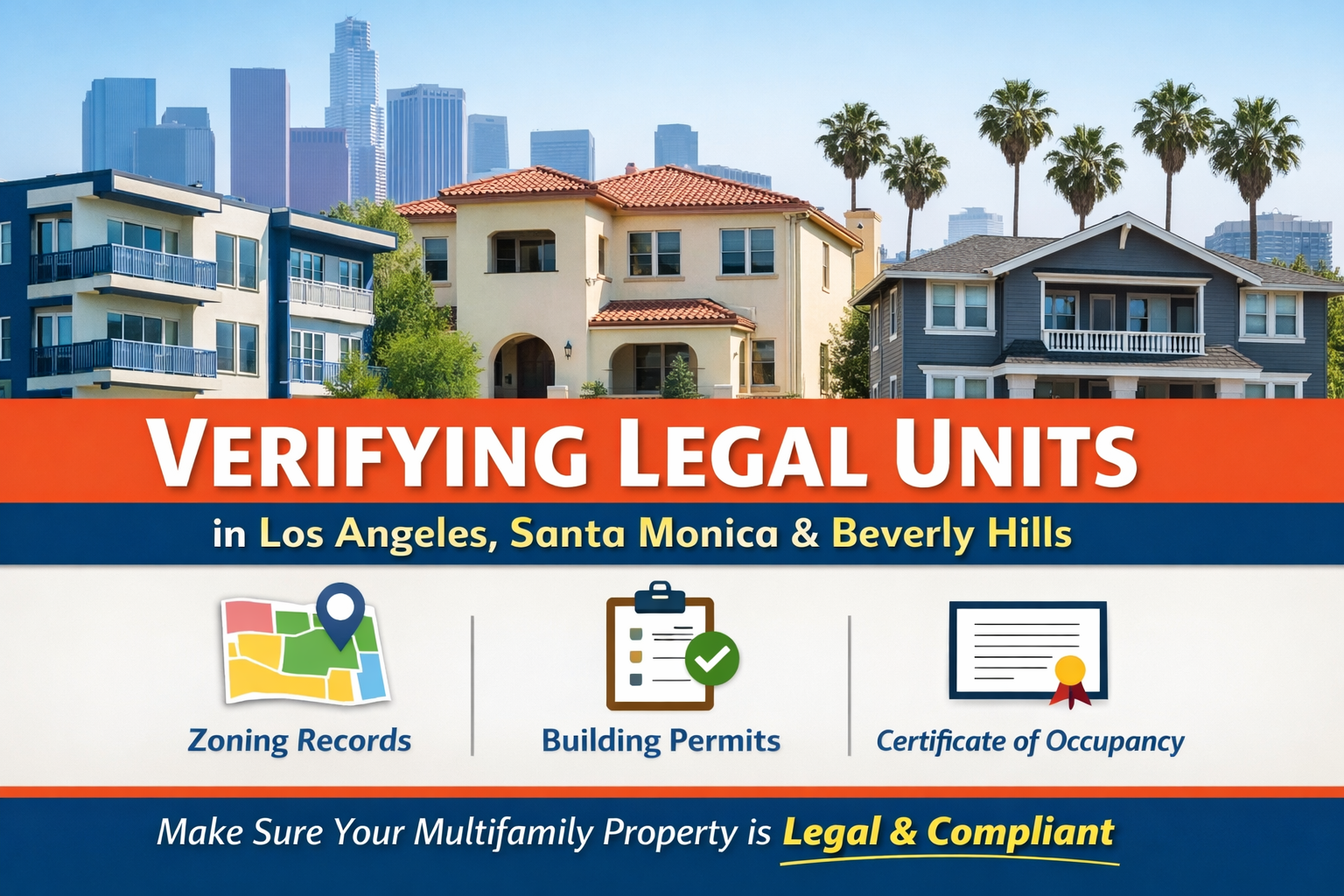
To verify whether all units in a duplex, triplex, or fourplex are legal, start by checking three key things: zoning, building permits, and the Certificate of Occupancy. The goal is to confirm that the number of units currently on the property matches what the city has officially approved.
In most cities, this information is available through the local Housing or Building and Safety Department’s permit portal. You can usually search the public records by entering either the property address or the Assessor’s Parcel Number (APN). These permit databases typically show the property’s permit history, number of approved dwelling units, and the Certificate of Occupancy, along with any permits for additions, conversions, or ADUs.
Because these records are generally public information, buyers, sellers, and agents can review them online to confirm whether the property’s layout and unit count match the city’s records. If anything is unclear, you can also contact the city’s Building and Safety or Planning Department directly to confirm how many units are legally permitted for that address.
What records show the legal number of units?
The most reliable records are:
Certificate of Occupancy
Building permit history
City zoning records
If the Certificate of Occupancy lists two units but the property is being rented as three or four, the additional units may not be legal; the certificate and permit records typically show the approved unit count, original building details, square footage, and any permitted additions, making them the best way to confirm what the city has officially authorized.
What are common red flags of illegal units?
Buyers often discover issues such as:
Garage conversions without permits
Extra kitchens added inside a unit
Units advertised as “studios” with no permits
No record of construction or ADU approval
These situations can affect financing, insurance, and resale value.
How do I check if units are legal in Santa Monica?
Contact Santa Monica Planning or Building & Safety and verify:
Zoning and density allowed on the lot
Permit history
Legal unit count in city records
How do I check if units are legal in Los Angeles?
Use city resources:
Los Angeles Department of Building and Safety permit history
ZIMAS for zoning and parcel data
Certificate of Occupancy.
How do I confirm legal units in Culver City?
Check with Culver City Planning or Building Division for:
Zoning designation (R1, R2, RLD, etc.)
Permit history
Certificate of Occupancy
How do I confirm legal units in Beverly Hills?
Contact the city’s Community Development Department and verify:
Zoning category (R-3, R-4, etc.)
Maximum units allowed based on lot size
Certificate of Occupancy and permit records
Can buyers sue if a property was advertised with the wrong unit count?
It depends, but buyers cannot rely solely on how a property is marketed. Real estate transactions include a buyer investigation or due diligence period for a reason. During that time, buyers are expected to independently verify the legal status of the property.
That means reviewing city records, checking permits, confirming the certificate of occupancy, and asking questions directly with the city’s building or housing department. Seller disclosures and marketing materials are only part of the information available. Buyers are expected to perform their own investigation before removing contingencies.
A knowledgeable real estate agent can guide buyers to the right sources, but ultimately verifying the property is part of the buyer’s due diligence.
Where to Find Information When Buying a Multi-Unit Property (Duplex, Triplex, Fourplex)
County Property Records (Ownership, Taxes, History)
This is usually the first place buyers verify basic facts about a property.
Typical information found here:
Current owner
Assessor’s Parcel Number (APN)
Property tax history
Lot size
Assessed value
Recorded documents
What buyers should check:
who owns this property
property tax history los angeles
property records los angeles county
City Building & Safety (Permits and Legal Units)
This is where you confirm whether the units are legal.
What you can verify:
building permits
additions or conversions
ADU permits
certificate of occupancy
number of approved dwelling units
Zoning and Land Use (Development Potential)
Buyers want to know what they can build or add later.
Information to check:
zoning designation
allowable density
height limits
parking requirements
ADU rules
Rent Control and Tenant Regulations
In cities like Santa Monica and Los Angeles this is critical for investors.
What to review:
rent control rules
allowable rent increases
tenant protections
eviction rules
Title Records (Liens, Easements, Restrictions)
Once escrow opens, buyers receive a preliminary title report.
This reveals:
liens
easements
property restrictions
CC&Rs
ownership history
MLS and Real Estate Platforms
Buyers compare the property to similar multifamily sales.
Where they research:
The MLS (CLAW MLS platform)
Redfin
Zillow
LoopNet
Information they analyze:
rent rolls
cap rates
GRM
comparable sales
Physical Inspections Buyers Should Get When Buying a Multifamily Property in Los Angeles or Santa Monica
Buying a duplex, triplex, or fourplex requires more than a basic home inspection. Multifamily buildings often share systems, may be older, and may have city compliance requirements. A thorough inspection helps uncover structural issues, deferred maintenance, and potential code violations.
Core Inspections Every Buyer Should Order
General Property Inspection
A licensed inspector evaluates the overall condition of the building, including the foundation, structure, roof, walls, windows, and common areas. They typically sample several units to check floors, ceilings, doors, and signs of water intrusion or structural movement.
Termite / Pest Inspection
A wood-destroying organism inspection checks for termites, dry rot, and pest damage. This is often required by lenders and is very common in older Los Angeles buildings.
Foundation Inspection
Inspectors look for settlement, cracks, or structural movement that could indicate foundation problems. In some cases a structural engineer may be recommended.
Roof Inspection
Evaluates roof condition, remaining lifespan, drainage, flashing, and possible leaks.
Other Inpections:
sewer scope inspection
structural engineer evaluation
environmental testing (lead paint, asbestos)
Building Systems Inspections
Plumbing and Sewer Inspection
Includes testing water pressure, identifying old galvanized pipes, and performing a sewer camera scope to check the main sewer line.
Electrical Inspection
Confirms panel capacity, wiring condition, and safety. Buyers should also verify whether units have separate electrical meters.
Utility Systems
Verify whether the building has separate gas and water meters or shared utilities, which can affect operating costs.
Unit-Level Checks
Buyers should also confirm features within each unit such as:
dishwashers
washer and dryer hookups
appliances included with the unit
heating systems
ventilation
These details affect both rental value and operating costs.
Los Angeles and Santa Monica–Specific Inspections
Seismic Retrofit Compliance
Many older buildings must comply with soft-story retrofit laws. Buyers should verify compliance through city records.
Balcony / Deck Safety Inspection (SB 721)
Buildings with three or more units must periodically inspect balconies, decks, and exterior elevated elements.
Why These Inspections Matter
Multifamily properties in Los Angeles and Santa Monica are often decades old. A thorough inspection can reveal hidden repairs, safety issues, or compliance requirements that significantly affect the price, financing, and long-term value of the property.
Does the city check multifamily properties for violations?
Yes. Many cities periodically inspect rental and multifamily properties through rental housing inspection programs or code enforcement inspections.
During these inspections, the city may check for safety issues, building code violations, or unpermitted construction. If the city discovers an illegal conversion, such as a garage turned into a bedroom or an additional unit built without permits, the owner may be required to correct the issue, obtain permits, or remove the unpermitted space.
Because code violations run with the property, buyers should always verify the legal unit count and permit history before completing a purchase.
What happens if a garage is converted into a living space without permits?
In many Los Angeles and Santa Monica multifamily properties, garages are sometimes converted into storage or living space. If the conversion was done without permits, the city can require the owner to remove the improvements and restore the garage to its original use.
City inspectors or code enforcement officers may notice this during routine rental inspections, property complaints, or when a permit is pulled for other work on the property. If the space was not legally approved as a dwelling unit, it generally cannot be counted as a legal unit.
Can a property be advertised as four units if city records show three?
Sometimes listings market a property as having more units than the city recognizes. A common example is when a garage or storage area has been converted into a living space, making the property appear to function as an additional unit.
However, if the city only recognizes three legal units, buyers should understand that the property may legally be considered a triplex rather than a fourplex. In those cases, the city could require the owner to restore the space to its original use.
This is why buyers should verify the legal unit count through city records, not just rely on how the property is marketed. This can affect the property’s pricing, appraisal, and overall value.
What if building records are missing for older properties?
In older neighborhoods like Venice, Santa Monica, or parts of Los Angeles, many properties were built in the early 1900s. In some cases, building permits or certificates of occupancy are not easily available online because the records are stored in historical archives.
When that happens, the owner may need to request documents from city archives or county records departments to confirm the legal number of units or the original building permits.
This can take additional time, but it is sometimes necessary to properly verify the property’s legal status.
Why buyer due diligence matters in small multifamily purchases
When buying a duplex, triplex, or fourplex, verifying the legal unit count is part of buyer due diligence. Buyers should review city permit records, certificates of occupancy, and speak with the local housing or building department if necessary.
A knowledgeable agent can help guide buyers to the right resources, but ultimately the goal is to make sure the property’s actual configuration matches what the city has legally approved.
Can I rent an unpermitted unit in Los Angeles or Santa Monica?
Generally, no. A unit that does not have building permits or a certificate of occupancy is not considered a legal dwelling unit, and renting it can expose the owner to code enforcement actions.
What happens if a landlord rents an illegal unit?
If the city discovers that a unit was created without permits, such as a garage conversion or an additional unit added without approval, the owner may receive a notice of violation from the city’s Building and Safety or Housing Department. The city can require the owner to:
Stop renting the unit
Obtain permits and bring the unit up to code
Restore the space to its original permitted use (for example, converting a garage back into a garage)
Cities like Los Angeles and Santa Monica actively enforce building code compliance, especially in multifamily and rental properties.
Can tenants raise legal issues if the unit is not permitted?
Potentially. If a unit was rented as a legal apartment but turns out not to be permitted, it can create disputes involving habitability, rent collection, or disclosure issues. Situations like this often end up being addressed through housing departments or civil courts.
Can an unpermitted unit be legalized?
Sometimes. In certain cases, owners may be able to apply for permits retroactively and upgrade the unit to meet building and safety requirements. Whether that is possible depends on zoning, building codes, and the physical layout of the property.
Why this matters for buyers and investors
For buyers of duplexes, triplexes, and fourplexes in Los Angeles or Santa Monica, verifying the legal unit count is essential. A space that functions as an apartment may not be recognized as a legal unit by the city, which can affect rental income, financing, insurance, and future resale.
Why unpermitted units matter to investors
For investors analyzing a duplex, triplex, or fourplex, the income numbers can be misleading if one of the units is not legally permitted.
If a property is advertised as four units but only three units are legally recognized, the rent from the illegal unit may make the gross income appear higher than it actually is from a legal standpoint.
That inflated income can make the cap rate look better than it truly is, which can lead buyers to overestimate the property's performance.
When investors discover that a unit is not permitted, they typically need to:
Recalculate the income based only on legal units
Adjust the cap rate and valuation
Renegotiate the purchase price accordingly
In other words, what initially looks like a strong investment based on the rent roll may actually be priced too high once the legal unit count is confirmed.
This is why verifying the legal number of units with the city is a critical step when evaluating small multifamily properties in Los Angeles, Santa Monica, Venice, and other Southern California markets.
Can insurance companies deny coverage if a multifamily property has illegal or unpermitted units?
Yes. In Los Angeles, including Santa Monica, insurance companies may deny or limit coverage if a loss involves an illegal or unpermitted unit.
How insurers typically treat illegal units: Many insurance policies exclude unpermitted structures or improvements. If a unit was built or converted without permits, damage to that space may not be covered under the policy.
If a loss is linked to unpermitted work, such as electrical wiring, plumbing, or structural changes that were never inspected the insurer may deny that portion of the claim on the basis that the work was not code-compliant.
In some cases, if an illegal unit is discovered during underwriting, inspection, or a claim investigation, the insurer may cancel the policy or decline to renew it.
What may still be covered: Coverage usually still applies to the legally permitted portions of the property for a covered event, such as a fire or storm damage. However, the insurer may refuse to pay for rebuilding the illegal unit or bringing that area into compliance with current building codes.
Practical steps if a property has an unpermitted unit: Property owners should disclose the unit to their insurance agent and request written clarification about whether the space is covered and under what conditions. Legalizing the unit through the City of Los Angeles permit or ADU programs can reduce both insurance risk and potential code enforcement issues.
What is a legal nonconforming unit in Santa Monica or Los Angeles?
A legal nonconforming unit is a dwelling that was lawfully built and permitted under the zoning rules at the time, but no longer meets current zoning or density regulations because the city later changed the rules.
Because the unit was originally legal, the city generally allows it to continue to exist and be rented, even though it would not be permitted if built today.
What documents should buyers review during escrow in Los Angeles or Santa Monica?
Preliminary Title Report – Shows ownership, liens, easements, and recorded restrictions.
Seller Disclosures (TDS / SPQ) – Reveals known defects, permits, additions, and property conditions.
Natural Hazard Disclosure (NHD) – Identifies flood zones, fire hazards, earthquake faults, and other risks.
Inspection Reports – Includes general inspection, termite, roof, sewer, plumbing, and electrical reports.
Building Permits & Certificate of Occupancy – Confirms the legal number of units and approved construction.
HOA Documents (if applicable) – CC&Rs, bylaws, financials, meeting minutes, and reserve reports.
Property Tax Information – Review current tax bills, special assessments, and possible supplemental taxes.
Appraisal Report – Confirms the lender’s valuation and verifies legal units.
Insurance Binder – Confirms coverage for the property and permitted structures.
Closing Disclosure / Settlement Statement – Final breakdown of purchase costs, credits, and prorations.
Conclusion
For buyers of duplexes, triplexes, and fourplexes in Los Angeles, verifying the legal number of units is one of the most critical steps in the due-diligence process. Small multifamily properties in areas like Los Angeles, Santa Monica, Venice, Culver City, and Beverly Hills often change hands many times over decades. During that time, units may have been added, converted, or modified without permits. As a result, the number of units advertised in a listing does not always match the number of units officially recognized by the city.
By reviewing zoning records, building permits, and the certificate of occupancy, buyers can confirm whether the property’s layout and unit count match the city’s records. This type of verification helps prevent problems with financing, insurance coverage, rental income projections, and resale value. It also allows buyers and investors to evaluate the property based on accurate information rather than assumptions.
For anyone considering the purchase of a duplex, triplex, or fourplex in Los Angeles or Santa Monica, taking the time to verify legal units and review public records is a critical part of due diligence.
If you are exploring small multifamily properties and want help analyzing permits, zoning, or potential title issues before making an offer, feel free to contact Rinde Philippe at Philippe Properties. Having a clear understanding of the property’s legal status can help buyers make informed decisions and avoid costly surprises later in the transaction.