How To Value Duplexes, Triplexes, and Fourplex Properties
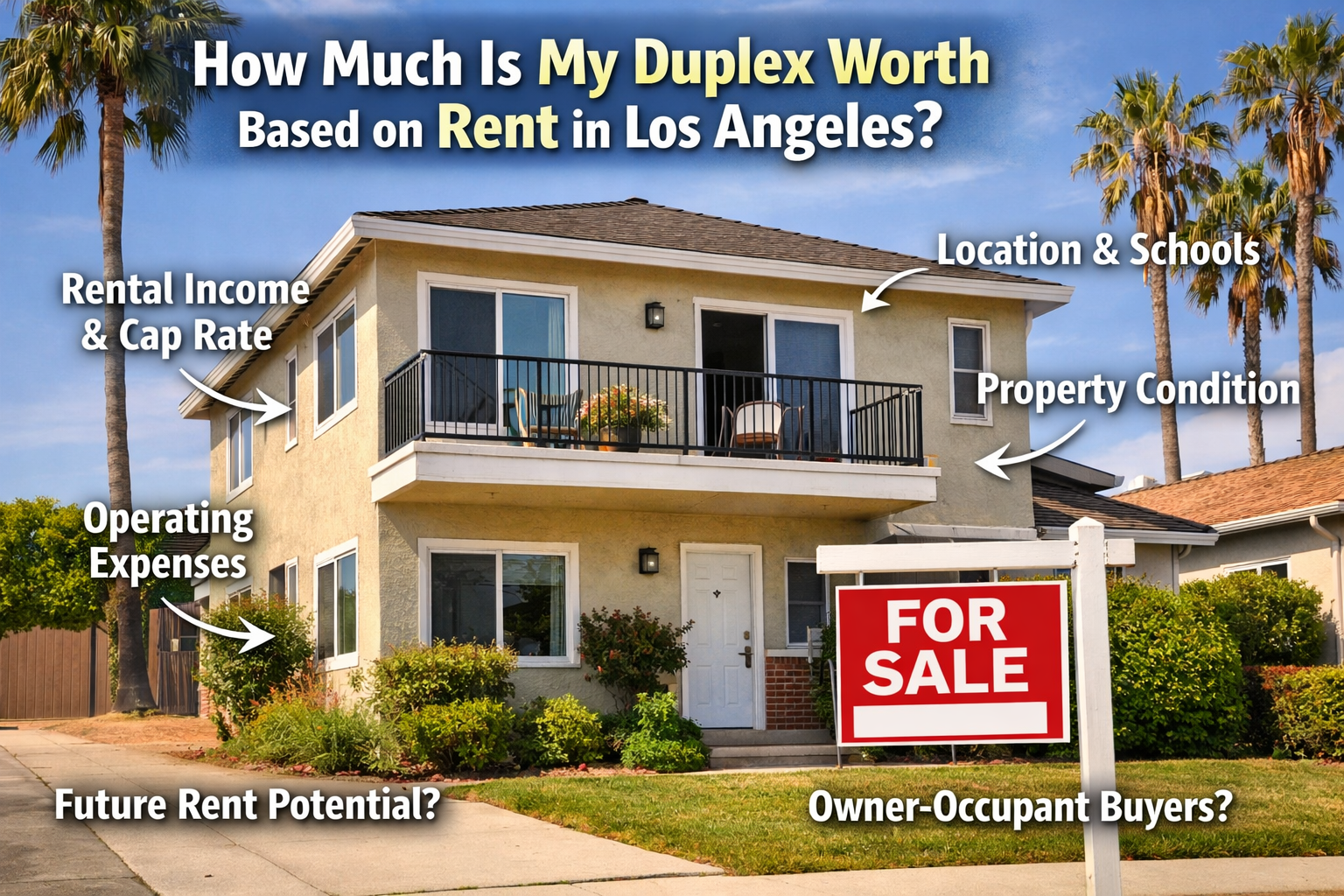
Many property owners wonder how small multifamily properties, such as duplexes, triplexes, and fourplexes—are actually valued. Unlike single-family homes, these properties are often evaluated based on the income they generate rather than just comparable sales.
Below are some of the most common questions people ask when trying to determine the value of a small multifamily property.
How do investors determine the value of a duplex, triplex, or fourplex?
Investors typically start by looking at the income the property produces. Instead of focusing only on square footage or finishes, they evaluate how much rent the property generates and how stable that income is.
Rental income is used to estimate net operating income (NOI), the money left after operating expenses such as maintenance, insurance, and property taxes are deducted. This income is then compared to similar properties in the market to estimate value.
Example:
If a duplex produces $60,000 in annual NOI and investors expect a 5.5% cap rate, the estimated value is about $1,090,000.
What is a cap rate and why does it matter?
One of the most common metrics investors use is the capitalization rate, or cap rate. The cap rate measures the relationship between a property's annual income and its value.
The basic formula is:
Cap Rate = Net Operating Income ÷ Property Value
This number helps investors estimate potential return and compare properties quickly.
Lower cap rates often indicate more stable or desirable markets, while higher cap rates may reflect higher risk but potentially higher returns.
Do duplexes and fourplexes get valued the same way as large apartment buildings?
Not exactly.
Small multifamily properties are often valued using a hybrid approach. Buyers still look at comparable sales like they would for houses, but they also analyze rental income to see if the numbers make sense as an investment.
Larger apartment buildings, on the other hand, are typically priced almost entirely based on income performance.
What expenses are considered when evaluating rental property income?
To estimate the real income of a property, investors subtract operating costs from rental revenue. These expenses may include:
Property taxes
Insurance
Maintenance and repairs
Utilities
Property management
Vacancy allowance
After these costs are removed, the remaining income is called Net Operating Income (NOI), which is one of the most important numbers used to value income properties.
Why do some duplexes sell for more than the income suggests?
This is a common frustration among investors.
In some markets, duplexes and small multifamily properties sell at a premium because they attract owner-occupants who want to live in one unit and rent the other. Some investors also notice that duplexes can appear overpriced compared to their rental income, especially in competitive markets.
Because of this demand, the market price of a duplex is sometimes influenced by lifestyle buyers rather than purely investment returns.
Is rent growth important when valuing small multifamily properties?
Yes. Investors often look at future rent potential, not just current rent.
If rents in the area are rising, a property with below-market rents may be considered more valuable because a new owner could increase income over time.
This is one reason why two properties with similar rents today can have very different prices.
What other factors affect the value of a duplex or fourplex?
Beyond income, investors also evaluate:
Location and neighborhood demand
Property condition and age
Local rent control regulations
Zoning or redevelopment potential
Vacancy rates in the area
Even small changes in these factors can significantly affect valuation.
Why do investors compare properties using income metrics?
Unlike single-family homes, small multifamily properties operate more like businesses.
The value is closely tied to how much income the building can produce and how reliable that income is over time. That is why investors rely heavily on metrics such as net operating income, cap rate, and rental projections when determining value.
How Much Is My Duplex Worth Based on Rent in Los Angeles?
A duplex’s value is often tied to the income it produces, but rent alone doesn’t determine the price. Location, school proximity, walkability, property condition, and neighborhood demand all play a major role in how buyers evaluate value.
Another factor is financing. Duplexes, triplexes, and fourplexes can qualify for residential financing, which attracts both investors and owner-occupants. Buyers who plan to live in one unit and rent the others sometimes pay more than pure investment numbers would suggest.
Because of these factors, two duplexes with similar rents can sell for very different prices depending on the area and overall appeal of the property.
What Cap Rate Do Investors Expect in Los Angeles?
Cap rates for small multifamily properties in Los Angeles generally fall in the mid-5% range, but they vary by neighborhood, property condition, and investor demand.
Typical Cap Rates for Duplexes, Fourplexes, and Apartment Buildings on LA’s Westside
Santa Monica multifamily cap rate: ~5%–5.5%
Venice multifamily cap rate: ~4.75%–5.75%
Mar Vista multifamily cap rate: ~5.25%–6%
Culver City multifamily cap rate: ~5%–6%
Beverly Hills multifamily cap rate: ~4%–5.5%
These ranges apply broadly to income-producing residential properties, including duplexes, triplexes, fourplexes, and larger apartment buildings, though larger properties are typically priced more strictly based on net operating income and cap rate.
Cap rates vary based on location, property condition, rent levels, and long-term investment potential. Prime areas like Santa Monica or Beverly Hills tend to trade at lower cap rates because buyers accept lower yields in exchange for stability and appreciation potential.
Why Cap Rates Vary
Several factors influence what investors are willing to accept:
• Location and neighborhood demand
• Property condition and renovation potential
• Rent levels compared to market rents
• Rent control regulations
• Walkability, schools, and proximity to employment centers
Small multifamily properties such as duplexes, triplexes, and fourplexes can also attract owner-occupants using residential financing, which sometimes pushes prices higher and cap rates lower.
Want to Know What Your Duplex Is Worth?
Cap rates vary significantly by exact neighborhood, rents, and property condition, especially on the Westside.
If you own a duplex, triplex, or fourplex in Santa Monica, Venice, Mar Vista, Culver City, Beverly Hills, or nearby areas, I can provide a quick estimate based on current investor expectations and local sales.
Should You Consider Selling a Duplex or Fourplex in Today’s Los Angeles Market?
Many owners of duplexes, triplexes, and fourplexes across Los Angeles—especially on the Westside—are asking the same question: Is now the right time to sell?
While interest rates, insurance costs, and rent regulations continue to evolve, demand for small multifamily properties remains surprisingly strong. Areas like Santa Monica, Venice, Mar Vista, Culver City, and Beverly Hills continue to attract buyers looking for properties that combine rental income with long-term appreciation potential.
One reason demand remains high is residential financing. Buyers can purchase properties with up to four units using programs such as FHA loans, often with relatively low down payments, as long as they occupy one of the units. In Los Angeles County, this means buyers can finance properties worth over $2.4 million while living in one unit and renting the others.
This “live-in and rent-the-rest” strategy—sometimes called house hacking, dramatically increases the number of potential buyers. Instead of competing only with investors, sellers often attract both owner-occupants and income-property investors, which can drive stronger prices.
Because of this expanded buyer pool, well-located duplexes and fourplexes in neighborhoods like Santa Monica, Venice, Mar Vista, and Culver City often sell at prices that exceed what traditional cap-rate calculations alone might suggest.
For many property owners, this creates an opportunity to sell into a market where demand is fueled by both lifestyle buyers and long-term investors.
FHA Loan Limits in Los Angeles County (2026)
In high-cost markets like Los Angeles County, FHA allows much higher loan limits for multi-unit properties.
Single-family (1 unit): $1,249,125
Duplex (2 units): $1,599,375
Triplex (3 units): $1,933,200
Fourplex (4 units): $2,402,625
These limits are updated annually by HUD based on local home prices.
Why FHA Financing Makes Small Multifamily So Attractive
FHA loans allow buyers to purchase 2–4 unit properties with relatively low down payments, as long as they occupy one of the units as their primary residence.
Some buyers can put as little as 3.5% down, live in one unit, and rent out the remaining units to help offset the mortgage.
This strategy, often called “house hacking”, is one reason duplexes, triplexes, and fourplexes often attract strong buyer demand in markets like Los Angeles.
Can you buy a duplex or fourplex with an FHA loan?
Yes. FHA loans allow buyers to purchase up to four units as long as the buyer lives in one of the units as their primary residence.
Why do investors like FHA loans for small multifamily?
Because they allow low down payments, 3.5% and residential financing terms, which can make it easier to buy a property where the rents help cover the mortgage.
Can rental income help you qualify for an FHA loan?
Often yes. Lenders may consider a portion of the expected rental income from the other units when evaluating your loan application.
Why does this affect pricing of duplexes and fourplexes?
Because buyers using residential financing sometimes pay more than strict investor numbers suggest, especially in competitive markets like Santa Monica, Venice, or Culver City.
How Location Affects Duplex and Fourplex Values on the Westside
Small multifamily values can vary dramatically depending on the neighborhood.
For example:
Santa Monica properties often trade at lower cap rates because of strong demand, coastal location, and strict development limits.
Venice buildings attract buyers who value walkability, beach proximity, and lifestyle appeal.
Culver City properties benefit from strong employment growth tied to media, tech, and entertainment companies.
Mar Vista is often considered a value pocket on the Westside with steady rental demand.
Beverly Hills remains one of the most prestigious markets in Los Angeles, where investors often accept lower cap rates in exchange for long-term stability.
Because of these differences, two identical duplexes can sell for very different prices depending on the exact neighborhood.
Most small multifamily properties on the Westside of Los Angeles are purchased by investors looking for long-term appreciation, stable rental demand, and proximity to employment centers such as Santa Monica, Silicon Beach, and Culver City.
Thinking About Selling a Duplex, Triplex or Fourplex in Los Angeles?
Duplexes, triplexes, and fourplexes occupy a unique space in real estate. They are residential properties, but they are also income-producing investments.
Understanding how investors analyze rental income, expenses, and market returns can help property owners better estimate value and position their property effectively when it comes time to sell.