ADU Rules in Los Angeles & Santa Monica
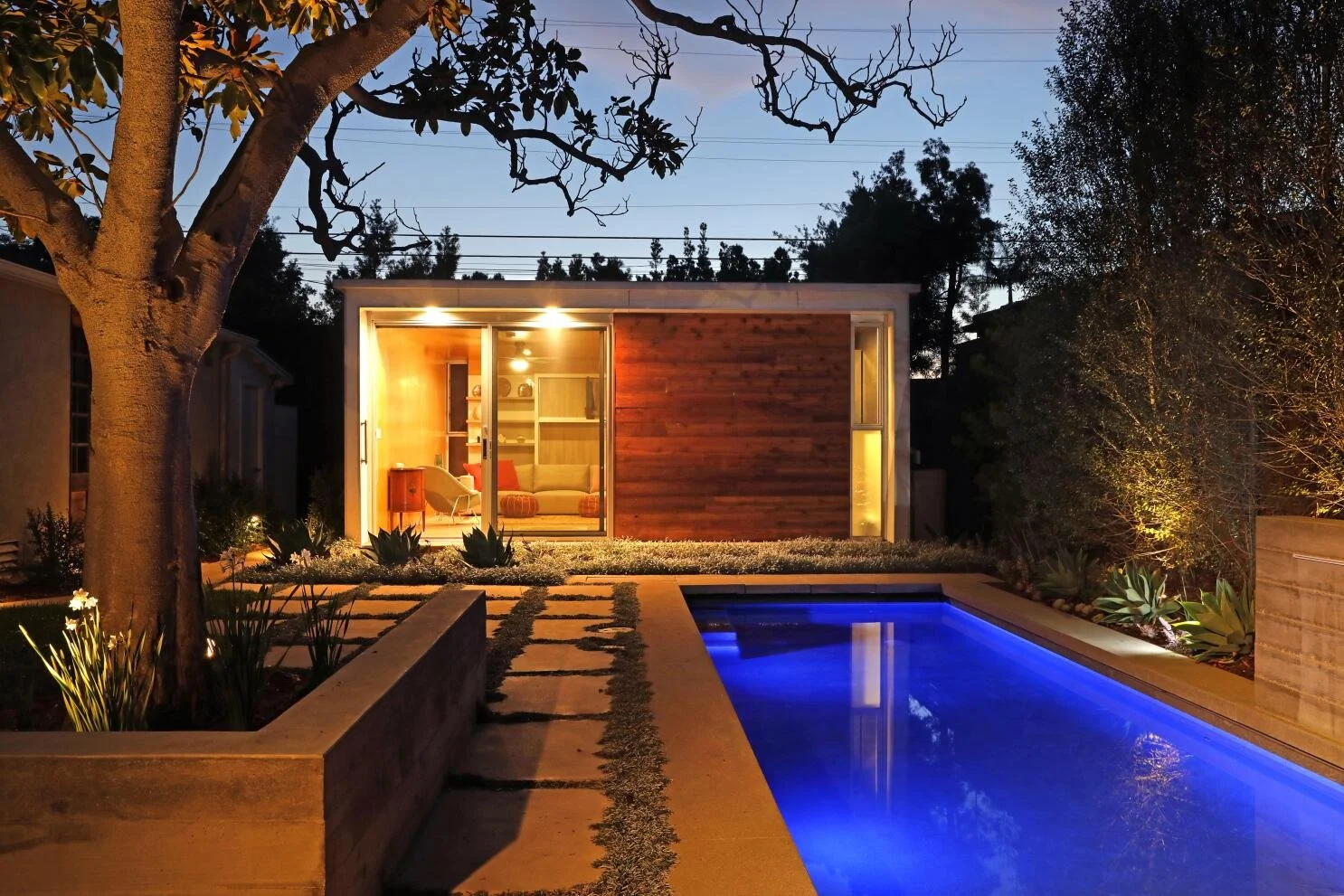
What exactly is an ADU and why is California pushing them so hard?
Accessory Dwelling Units are secondary housing units on a residential lot — often called granny flats, backyard homes, or in-law units ADUs.
California aggressively supports them because they increase housing supply without requiring new land, major infrastructure, or high-rise construction. They are one of the state’s fastest ways to add housing density.
Online discussions consistently show homeowners didn’t realize how strongly the state overrides local zoning in favor of ADUs.
How much does it really cost to build an ADU in Los Angeles?
This is the most asked question across Reddit and contractor forums.
Real-world ranges people report:
• Garage conversion: $80,000–$150,000
• Detached ADU: $180,000–$350,000+
• High-end builds can exceed $400,000
Cost depends heavily on:
• Utility upgrades
• Sewer tie-ins
• Soil conditions
• Fire sprinklers
• Architectural fees
• Plan check delays
People online often underestimate soft costs (permits, engineering, city requirements).
Do ADUs increase property value?
Short answer: yes — but not dollar-for-dollar.
Investors frequently say: You typically recapture 60–80% of build cost in immediate value. Long-term rental income often makes the ROI more attractive than resale value alone.
In high-rent areas (Santa Monica, West LA), the rental income component can dramatically improve overall returns.
Can I sell my ADU separately?
Generally, no, not unless the lot is subdivided or converted to a condo structure under specific laws. Most ADUs are not separately sellable; they transfer with the primary residence.
Will my property taxes go up?
Yes, but only on the value of the new construction, not the entire property.
The County reassesses the added square footage value, not your original home value (unless you trigger a full reassessment by selling).
Do I need parking for an ADU?
Many people are surprised to learn parking requirements have been significantly reduced or eliminated in many cases ADUs.
Especially if:
• The property is near public transit
• It’s a garage conversion
• It’s within certain zones
State law reduced parking burdens to encourage development.
What is a JADU and how is it different?
A Junior ADU is smaller (maximum 500 sq ft) and must be within the walls of the existing home ADUs.
It may:
• Share a bathroom
• Use small plug-in appliances
• Share utilities
JADUs are cheaper to build because they repurpose existing space and don’t require new infrastructure ADUs.
Can I build an ADU and a JADU at the same time?
Yes. State updates allow ADUs and JADUs to be built concurrently with a single-family dwelling ADUs.
This is a strategy investors increasingly discuss:
Primary home + ADU + JADU = three income streams on one lot.
Will tenants in ADUs be rent-controlled?
This depends on:
• City jurisdiction
• Year built
• Whether the property is owner-occupied
In Los Angeles City, newly built ADUs are generally not subject to older rent control rules if built after certain dates, but local rules must always be verified.
Can I Airbnb my ADU?
In Los Angeles: Short-term rental rules are strict. The property typically must be your primary residence to legally operate short-term rentals.
Santa Monica has even stricter rules.
Many homeowners who built ADUs expecting Airbnb income and later faced enforcement issues.
Are ADUs really “easy” to get approved?
Easier than before - yes.
Simple - no.
Even though state law expanded allowances ADUs, homeowners still report:
• Plan check delays
• Utility coordination problems
• Title issues
• Setback misunderstandings
Do I need my lender’s permission to build an ADU in Los Angeles?
Usually, you don’t need lender approval to apply for ADU permits. But most mortgages require written consent before you actually build or make major changes to the property.
Why lender approval can matter
Most loan agreements (banks, credit unions, Fannie/Freddie, HELOCs) include clauses that:
Prohibit major alterations without prior written consent
Require compliance with building codes, permits, and insurance
An ADU is typically considered a material alteration because it changes the lender’s collateral.
What happens in practice
Homeowners typically:
Inform the lender upfront – especially if using a construction loan, refinance, or HELOC. The lender reviews plans and budget.
Build with cash without notifying the lender – but issues can arise later during refinance or sale.
Build without permits – not legal and can cause fines, stop-work orders, and title or insurance problems.
What the City requires
For ADU permits, Los Angeles only requires:
Proof of ownership
Code-compliant plans and fees
The city does not ask for lender approval.
Practical steps
Review your mortgage and any HELOC documents for alteration restrictions.
If borrowing to fund the ADU, expect lender underwriting.
Speak with your lender (or a real estate attorney) before starting construction.
Always build with permits to protect future refinancing and resale.
Can your insurance company drop you if you rent out your ADU in Los Angeles?
Yes — they can cancel or refuse to renew your homeowners policy if you rent the ADU without proper coverage. But it’s usually preventable.
Why this happens
Most homeowners policies are written for owner-occupied use only. Renting out an ADU changes the risk to a landlord exposure.
If you don’t notify your insurer:
A claim could be denied
The policy could be non-renewed
The carrier may decline to insure rental use altogether
How to avoid problems
Tell your insurer before renting.
Ask whether they can:
Add an endorsement for rental use, or
Write a separate landlord policy for the ADU
Make sure the ADU is fully permitted and legal
Coverage you likely need
Landlord/rental dwelling coverage
Higher liability limits (possibly an umbrella policy)
Require tenants to carry renters insurance
Practical LA tip
Illegal or unpermitted ADUs increase the risk of denial or cancellation. Keep everything permitted and documented.
If you share your insurer and whether the ADU is attached or detached, I can help you frame the exact questions to ask so you minimize risk.
How long does it really take to get ADU permits approved in Los Angeles?
Realistically, most ADU permits in Los Angeles take 2–6 months from first submittal to issuance. While state law says 60 days, actual timelines are often longer due to workload and corrections.
Typical timeline (City of LA - standard lot)
Plan preparation: 3–5 weeks before submission
Initial plan check: 6–8 weeks
Corrections & resubmittals: 2–4+ weeks
Final approval & permit issuance: about 1 week
Best-case: ~8–12 weeks
Common reality: 4–6 months
What makes it longer
Hillside or coastal properties
Special overlays or extra agency reviews
Utility upgrades, easements, or fire review
Incomplete or error-filled plans
Edge cases can stretch to 6–9+ months.
How to speed it up
Use an experienced ADU designer familiar with LADBS
Submit clean, complete, code-compliant plans
Consider LA’s pre-approved ADU Standard Plans
If you tell me whether your ADU is detached, attached, or a garage conversion—and whether you’re in a hillside or coastal zone—I can give you a more tailored timeline range.
Is It Worth Building an ADU in Santa Monica?
Short answer: Often yes — but only if the numbers work for your lot, budget, and long-term plan.
Why It Can Make Sense
Strong rental market: 1-bedroom ADUs commonly rent in the $3,000–$5,500/month range.
Equity boost: Adding a legal second unit typically increases resale appeal and value.
Long-term income: Many owners recover costs over time through steady rent in a high-demand coastal market.
Updated state laws: Smaller units and streamlined approvals have improved feasibility compared to prior years.
What It Costs
Santa Monica is more expensive than most of Los Angeles.
Garage conversion: roughly $180k–$300k
Detached ADU: often $350k–$550k+
JADU (under 500 sq ft): sometimes $100k–$200k
Permitting and soft costs are higher here due to coastal regulations.
What Slows It Down
Coastal zone review (most of Santa Monica falls within it)
Historic districts or HOA restrictions
Utility upgrades
Longer permitting timelines than inland LA
Short-term rentals under 30 days are generally not allowed, so income is limited to long-term tenants.
When It’s Worth It
✔ You plan to hold long term
✔ You want rental income or family housing
✔ You can finance efficiently or own the home with strong equity
When It’s Not
✖ Tight lot or heavy coastal constraints
✖ HOA limitations
✖ You’re stretching financially to build
In Santa Monica, ADUs are less about quick profit and more about long-term wealth building and flexibility.
Can You Have 3 Units on a Single-Family Lot in Los Angeles?
Yes. On most single-family (R1 / LAR1) lots in the City of Los Angeles, you can legally have three units without rezoning.
How It Works
You’re allowed:
1 primary single-family home
1 ADU (attached or detached)
1 JADU (up to 500 sq ft, inside the main house)
That equals 3 total units on one lot.
Key Rules to Know
Must meet setback, height, and lot coverage limits
JADU requires owner occupancy (ADU does not)
No short-term rentals under 30 days
Property must comply with building and safety codes
Can You Build More Than 3?
Possibly, but it depends:
SB 9 may allow 2 primary units + ADU/JADU
Lot splits can create additional build options
True multifamily (4+ units) requires different zoning
What Is SB 9?
SB 9 (Senate Bill 9) is a California law that allows more housing on single-family lots without rezoning or public hearings.
It gives property owners two main options:
Build two primary homes on one lot (duplex or two detached houses), or
Split the lot into two parcels, with up to two units allowed on each parcel.
If the property qualifies and objective standards are met, approval is ministerial (no discretionary hearings).
Key limits:
Lot must meet minimum size requirements
Certain historic, coastal, or high-fire areas may be restricted
Owner-occupancy rules may apply (especially with lot splits)
In short: SB 9 lets single-family lots function more like small multi-unit properties.
Can SB 9 and ADUs Be Combined?
Yes, but there are limits.
SB 9 and ADU laws can work together, but you cannot stack unlimited units.
Without a Lot Split
You may be able to have:
2 primary units (under SB 9)
Plus an ADU and/or JADU
Total potential: up to 4 units, depending on local interpretation and existing structures.
With a Lot Split
Each new parcel may allow:
Up to 2 primary units
ADU options may still apply
However, cities like Los Angeles monitor stacking to prevent excessive density on former R1 lots.
Bottom Line
SB 9 = 2 primary units (and possibly a lot split).
ADU law = additional secondary units.
Combined, some properties can reach 4 total units, but zoning, overlays, and existing units matter.
If you share your zoning (R1, LAR1, etc.) and whether you're considering a split, I can give you the realistic maximum for your specific lot.
Will Adding an ADU Push Me Over the “Mansion Tax” Threshold?
No. Building an ADU does not trigger Los Angeles’ Measure ULA (often called the mansion tax).
Measure ULA applies only when you sell a property.
The tax is based on the final sale price, not on construction or improvements.
Simply adding an ADU does not create a tax event.
When It Could Matter
If the ADU increases your property’s value and you later sell:
If the sale price exceeds the ULA threshold (adjusted annually, roughly $5M+ range), the tax would apply to that sale.
The ADU itself isn’t taxed — the transaction is.
Bottom Line
Adding an ADU alone does not push you into the mansion tax.
Only a future sale above the threshold would trigger Measure ULA.
Does Measure GS Apply to ADUs in Santa Monica?
No. Measure GS does not apply to building or adding an ADU.
Measure GS is a real estate transfer tax. It only applies when a property is sold for $8 million or more.
It does not apply to:
Construction
Permits
Improvements
Adding an ADU
There is no tax triggered just because you build.
When It Could Matter
If you later sell your property:
If the final sale price exceeds $8M, Measure GS applies at closing.
The ADU itself isn’t taxed; the sale price is.
Given Santa Monica’s typical home values, most properties remain well below that threshold, even after adding an ADU - unless you’re already in the ultra-luxury range.
Bottom Line
Adding an ADU does not trigger Measure GS.
Only a future sale above $8 million would.
Are Unpermitted ADUs a Problem When Selling in Los Angeles?
Yes; they are a serious issue.
Unpermitted ADUs can:
Block buyer financing (most lenders won’t fund unpermitted space)
Create disclosure problems during escrow
Trigger major price reductions
Delay or collapse the sale
Buyers typically demand credits for legalization, upgrades, or potential demolition. Even cash buyers discount heavily because of risk.
Los Angeles does offer legalization pathways (including life-safety programs), but they should be completed before listing to avoid deal disruption.
Are Unpermitted ADUs a Problem When Selling in Santa Monica?
Even more so.
Santa Monica has:
Stricter rent control oversight
Coastal review layers
Detailed permitting standards
Retroactive legalization can take longer and cost more than in LA City. If discovered during escrow, it can stall or derail the transaction.
Bottom Line
Unpermitted ADUs:
Reduce value
Scare lenders
Increase liability
Slow escrow
Permitted ADUs add value. Unpermitted ones subtract value.
If you tell me whether the unit is detached or a conversion, I can outline the best strategy before you list.
Is My ADU Rent Controlled in Los Angeles?
Usually no. Most newly built ADUs in Los Angeles are exempt from rent control under state law (Costa-Hawkins).
When ADUs Are Exempt
New detached ADUs → Typically fully exempt
Newly constructed attached ADUs → Usually exempt
Single-family homes with ADUs → Generally not subject to LA’s RSO
This means you can typically set and adjust rent at market rates.
When It Gets Complicated
Garage conversions or units tied to pre-1978 multifamily properties may require closer review.
If you add an ADU to a pre-1978 rental property and later rent the main house, RSO rules could affect the original structure.
LA’s Rent Stabilization Ordinance mainly applies to multifamily buildings built before October 1, 1978, not new ADUs.
Are ADUs Rent Controlled in Santa Monica?
It depends on how the ADU was created.
According to the Rent Control Board newsletter (Fall 2024) Fall 2024 Rent Control News:
ADUs Created by Conversion (on rent-controlled property)
If the ADU was created by converting existing space (garage, storage, etc.) on a rent-controlled property:
The new unit is rent controlled
The owner must file a Petition for Rental Unit Registration
It becomes subject to Santa Monica rent control rules
ADUs Built as Entirely New Construction
If the ADU is new construction (not converted from existing controlled space):
It may qualify for an exemption
Owners must contact the Rent Control Agency to confirm status
So the key distinction is:
Conversion = Controlled
Brand new construction = May be exempt
What About Loss of Parking or Amenities?
If ADU construction removes:
Parking
Storage
Other base amenities
Tenants may file for:
A permanent rent decrease, or
A construction-related rent decrease
The Board cannot stop amenity removal, but tenants can seek rent reductions.
Official Rent Control Link
Santa Monica Rent Control Agency:
https://www.santamonica.gov/rentcontrol
ADU & petition info:
https://www.santamonica.gov/rent-control-petitions
Phone: (310) 458-8751
Email: rentcontrol@santamonica.gov
Bottom Line
In Santa Monica:
ADUs are not automatically exempt.
Conversions are rent controlled.
New builds may be exempt — but confirmation is required.
If you tell me:
Is it a garage conversion or detached new build?
What year was the main building constructed?
Can I Rent Out Both My House and ADU in Los Angeles?
Yes. In the City of Los Angeles, you can rent both the primary home and a permitted ADU.
Key points:
Current state law removed most owner-occupancy requirements.
Both units must be properly permitted.
Short-term rentals (under 30 days) are generally not allowed for ADUs.
If the main house is pre-1978 and subject to LA’s Rent Stabilization Ordinance (RSO), the main house may have rent caps — but a newly built ADU is typically exempt.
Bottom line: Dual long-term rentals are allowed if everything is legal and permitted.
Can I Rent Out Both My House and ADU in Santa Monica?
Yes; but be more cautious.
Santa Monica follows state ADU law, so you can rent both units if:
The ADU is fully permitted
The property complies with local rent control rules
Important distinction:
Santa Monica has strict local rent control.
Whether rent limits apply depends heavily on the property type and original construction date.
Short-term rentals are also restricted.
Bottom line: You can rent both units, but Santa Monica’s rent control rules require closer review than LA City.
If you share:
Year built
Detached vs conversion
Current occupancy
If You’re Buying, Selling, or Building an ADU
If you are:
Buying a home with an ADU
Selling a property with a permitted or unpermitted ADU
Considering adding an ADU for rental income
Wondering about rent control, SB 9, or mansion tax implications
Trying to determine whether your ADU is exempt
You need clarity — not assumptions.
As an ADU-focused real estate advisor in Los Angeles and Santa Monica, I work through these exact issues regularly: zoning, rent control exposure, resale positioning, value impact, and compliance strategy.
ADUs are no longer a side conversation in our market. They are central to value. Contact Us.