Should I Sell My House As-Is or Fix It Up Before I Sell?
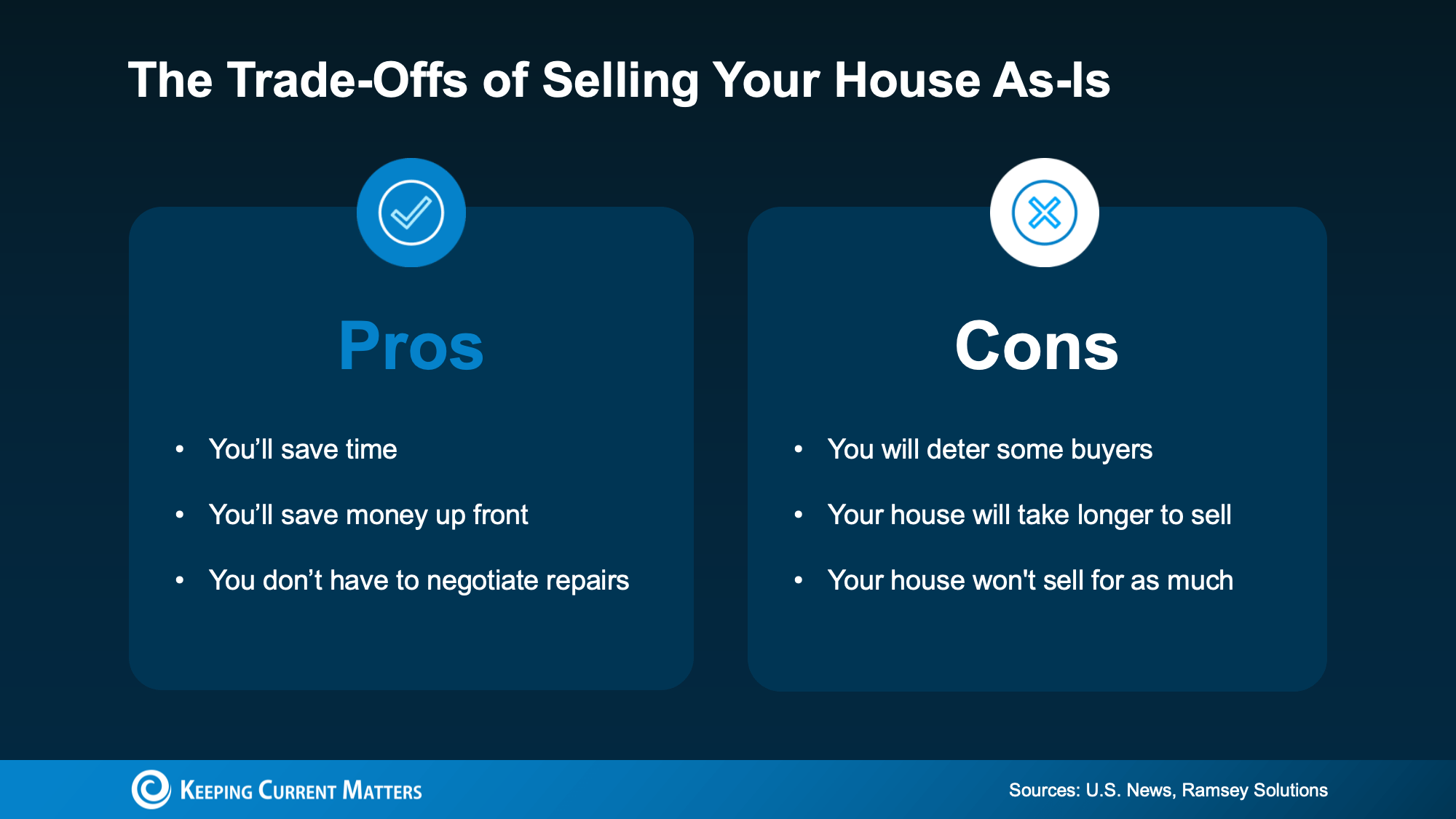
If you’re planning to sell your home in 2026, one of the first questions you’re likely asking is simple but consequential:
Should I sell my house as-is, or should I make repairs before listing?
In today’s market, that decision matters more than it did just a year ago. Inventory is rising, buyers are becoming more selective, and condition is once again influencing price, negotiations, and time on market.
Here’s what sellers need to understand before deciding.
Is It Better to Sell a House As-Is or Make Repairs in 2026?
The short answer: it depends on your goals, your property, and your local market.
According to a Realtor.com forecast, housing inventory is expected to rise again in 2026. As buyers gain more choices, they regain leverage. That means homes that are clean, updated, and move-in ready tend to stand out, while properties needing work face more scrutiny.
Data from the National Association of Realtors shows that approximately 65% of sellers complete at least minor repairs before listing, while about 35% choose to sell as-is. That gap exists for a reason: condition still drives demand.
What Does Selling a House As-Is Really Mean?
Selling as-is means you are offering the property in its current condition, without agreeing to make repairs or improvements before closing.
Important clarification:
Buyers can still inspect the home
Sellers are still legally required to disclose known defects
As-is does not mean hiding issues or avoiding disclosure obligations
As-is is a pricing and negotiation signal, not a legal loophole.
Does Selling As-Is Lower the Sale Price?
In most cases, yes.
As-is homes typically sell for less than comparable move-in-ready properties, often because buyers factor in:
Repair costs
Time and inconvenience
Risk and uncertainty
Industry estimates commonly place the discount range at 5% to 20%, depending on condition, location, and market strength. In high-demand neighborhoods or teardown markets, the gap may be smaller. In balanced or buyer-leaning markets, it can widen.
Who Buys As-Is Homes?
Selling as-is tends to attract a narrower, more specialized buyer pool, including:
Investors and flippers
Cash buyers
Contractors or experienced DIY buyers
Many traditional buyers — especially those using conventional or FHA financing — avoid as-is listings due to inspection and lender concerns. This reduced pool can mean fewer showings and slower momentum.
When Does Selling a House As-Is Make Sense?
Selling as-is can be the right choice when:
You need a fast, low-stress sale
You lack the time or funds for repairs
The home requires major updates or deferred maintenance
The value is primarily in the land or location
The property is inherited, part of an estate, or tied to a divorce
In these cases, convenience may outweigh maximizing price.
Should I Fix My House Before Selling?
Often, yes, but selectively.
You don’t need a full renovation to improve results. Strategic, cost-effective updates can significantly improve buyer perception, such as:
Paint
Basic cosmetic repairs
Cleaning and decluttering
Addressing obvious deferred maintenance
Homes that show well typically:
Attract more buyers
Generate stronger offers
Spend less time on the market
Face fewer inspection renegotiations
Can Buyers Still Negotiate Repairs on an As-Is Sale?
Yes, and this surprises many sellers.
Even with an as-is listing, buyers may still attempt to renegotiate after inspections. The difference is that you are not obligated to agree. A clearly written as-is clause gives you leverage, but it does not prevent requests.
This is where proper pricing and strong contract language matter.
Do I Still Have to Disclose Problems If I Sell As-Is?
Absolutely.
Selling as-is does not remove disclosure requirements. Sellers must disclose defects they are aware of, such as:
Foundation issues
Water intrusion
Mold
Structural concerns
Failure to disclose known issues can expose sellers to post-closing liability.
Should I Get a Pre-Listing Inspection for an As-Is Sale?
In many cases, yes.
A pre-listing inspection can:
Increase transparency
Reduce renegotiation later
Help price the home realistically
Build buyer confidence
Providing information upfront allows buyers to factor issues into their offer instead of reopening negotiations mid-escrow.
How Low Should I Price an As-Is Home?
Before listing, you should know:
Your realistic market value
Your minimum acceptable price
Where you will and will not negotiate
Having a clear bottom line helps you respond calmly and strategically to offers — especially when buyers test your resolve.
Why Working With the Right Agent Matters More in As-Is Sales
Selling as-is is not simpler marketing - it’s more nuanced.
An experienced agent can:
Price the property correctly
Position strengths over flaws
Target the right buyer pool
Write strong, enforceable contract language
Prevent unnecessary concessions
As one experienced seller learned after standing firm on an as-is contract: the clause only works if it’s written clearly and enforced confidently.
Bottom Line: Should You Sell As-Is or Make Repairs?
You don’t have to fix your home before selling — but in many 2026 markets, doing nothing may cost you.
The right choice depends on:
Your timeline
Your financial flexibility
Your property’s condition
Buyer demand in your area
A brief conversation with a knowledgeable local agent can help you compare both scenarios — as-is versus lightly improved — and choose the path that aligns with your goals.
If you’re preparing to sell, clarity upfront leads to fewer surprises later.