90025 West Los Angeles Multifamily Values
Duplex Sales Sold Data(2 Units – 90025)
1910 Colby Ave | 2 Units | 1,536 SF | 6,096 Lot | SP $1,275,000 | GRM 26.30 | GOI $57,000 | DOM 9
1410 Federal Ave | 2 Units | 2,082 SF | 3,342 Lot | SP $1,225,000 | DOM 185
1927 Butler Ave | 2 Units | 1,536 SF | 6,616 Lot | SP $1,530,000 | DOM 8
1912 Barry Ave | 2 Units | 2,082 SF | 9,075 Lot | SP $1,615,000 | GRM 32.10 | DOM 28
2017 Butler Ave | 2 Units | 4,564 SF | 5,258 Lot | SP $2,300,000 | GRM 13.23 | GOI $188,928 | DOM 124
1849 Benecia Ave | 2 Units | 3,460 SF | 5,334 Lot | SP $2,630,000 | Fully Vacant | Owner-User Driven
1833 Benecia Ave | 2 Units | 4,134 SF | 5,327 Lot | SP $3,230,000 | Renovated | High-End Duplex
Why Are Duplexes in West Los Angeles So Expensive?
Same asset class → completely different buyer pools
GRM ranges from ~13 → 30+
Cap rate is often irrelevant
What actually drives duplex pricing:
Vacancy (huge premium if vacant)
Layout (can owner occupy?)
Location (Century City / Westwood proximity)
Build quality
Duplex = house alternative, not a pure income property
How are duplexes valued in West Los Angeles, and why are prices high even with low rents?
Duplexes in West Los Angeles are valued using comparable sales and income, but pricing is strongly driven by vacancy (one or both units delivered vacant), lot size, favorable zoning, and owner-occupant demand. Prices remain high, even with low rents—because buyers are purchasing land potential and flexibility, often viewing the property as two homes; living in one while offsetting the mortgage with the other, rather than strictly underwriting current NOI.
Additionally, duplexes are easier to manage with only two tenants, and they offer a clear owner-occupancy path: buyers can move into one unit (subject to local regulations), which further increases demand and supports pricing beyond pure investment metrics.
Triplex Sales (3 Units – 90025)
1561 S Carmelina Ave | 3 Units | 4,710 SF | 7,587 Lot | SP $3,525,000 | CAP 5.42% | GRM 14.24 | New Construction
How Triplex Values Are Actually Determined
First point where income starts to matter
Still influenced by:
Owner-user potential
Unit mix (large units = premium)
Observed behavior:
Cap rate: ~5.4% (clean stabilized example)
GRM: ~14 range
Triplex = hybrid asset (half emotional, half math)
How do you value a triplex in West Los Angeles?
A triplex in West Los Angeles is primarily valued based on its net operating income, cap rate, and comparable sales, rather than as a single-family home. Rent levels, legal unit count, and condition heavily influence value, with owner
-occupant appeal sometimes pushing pricing slightly above pure income metrics.
Fourplex Sales (4 Units – 90025)
11974 Walnut Ln | 4 Units | 3,224 SF | 5,000 Lot | SP $1,700,000 | Delivered Vacant | Value-Add
What Drives Fourplex Pricing in West LA
Transition point to true investors
Buyers underwriting:
Rental upside
Expenses
Cap rate
But still influenced by:
Vacancy
Unit sizes
Parking
Fourplex = entry-level investment property
5 Unit Sales (90025)
1728 Granville Ave | 5 Units | 2,784 SF | 5,903 Lot | SP $1,250,000 | Low price basis
1825 Purdue Ave | 5 Units | 4,055 SF | 6,020 Lot | SP $1,400,000 | CAP 4.90% | GRM 18.00
1861 Midvale Ave | 5 Units | 5,538 SF | 6,500 Lot | SP $2,015,000 | CAP 5.28% | GRM 11.99
What Buyers Pay for 5 Units in 90025
Cap rate range: ~4.9% → 5.3%
GRM range: ~12 → 18
Key driver:
Vacancy + upside
This is where pricing becomes true underwriting
6 Unit Sales (90025)
1403 Brockton Ave | 6 Units | 3,692 SF | 6,993 Lot | SP $2,025,000 | CAP 6.90% | GRM 12.16
1619 Colby Ave | 6 Units | 3,838 SF | 6,004 Lot | SP $2,195,000 | CAP 5.70% | GRM 11.73
6 Unit Insight
Cap rate widens:
5.7% → 6.9%
Higher cap = more risk / older asset / upside
Clear investor pricing here
7 Unit Sales (90025)
1658 Colby Ave | 7 Units | 5,464 SF | 5,500 Lot | SP $2,440,000 | CAP 4.40% | GRM 13.94
7 Unit Insight
Lower cap rate = stronger location / stability
GRM tightens
👉 Demand increases as unit count increases
8 Unit Sales (90025)
1944 S Beverly Glen Blvd | 8 Units | 4,536 SF | 5,752 Lot | SP $2,510,000 | CAP 5.15% | GRM 12.05
1246 S Saltair Ave | 8 Units | 4,320 SF | 6,861 Lot | SP $2,450,000 | CAP 4.39% | GRM 14.05
1940 S Beverly Glen Blvd | 8 Units | 6,200 SF | 5,750 Lot | SP $2,697,500 | GRM 12.89
8 Unit Insight
Cap range: ~4.3% → 5.1%
GRM: ~12 → 14
Stabilized assets compress pricing
9 Unit Sales (90025)
1453 S Westgate Ave | 9 Units | 4,872 SF | SP $2,395,000 | CAP 5.97% | GRM 10.89
11727 Ohio Ave | 9 Units | 7,697 SF | SP $2,597,000 | CAP 5.50% | GRM 10.90
1253 Federal Ave | 9 Units | 7,208 SF | SP $2,765,000 | CAP 5.69% | GRM 10.99
1320 Carmelina Ave | 9 Units | 6,875 SF | SP $2,650,000 | GRM 14.50
1703 Stoner Ave | 9 Units | 9,056 SF | SP $2,900,000 | CAP 5.09% | GRM 14.57
1236 McClellan Dr | 9 Units | 7,527 SF | SP $3,050,000 | CAP 5.09% | GRM 12.05
9 Unit Insight
Cap rate stabilizes:
~5.0% → 6.0%
GRM tight:
~10.8 → 14.5
👉 Strong investor competition
10 Unit Sales (90025)
1738 Colby Ave | 10 Units | 7,055 SF | SP $2,550,000 | CAP 4.08% | GRM 15.70
1625 Butler Ave | 10 Units | 12,759 SF | SP $4,700,000 | CAP 4.72% | GRM 13.25
10 Unit Insight
Cap rates compress:
~4.0% → 4.7%
Larger buildings = more stable income
Institutional-type behavior starts here
14–15 Unit Sales (90025)
1615 Greenfield Ave | 14 Units | 18,385 SF | SP $7,000,000 | CAP 5.85% | GRM 10.77
1447 Saltair Ave | 15 Units | SP ~$4,200,000
Larger Asset Insight 90025
Cap rates widen again depending on:
Age
Condition
Rent levels
Not all larger deals are “premium” depends on execution
What Cap Rates Are Investors Paying in 90025-West Los Angeles?
The closest thing to a “true average”
~5.0% is the clean, data-backed baseline for West Los Angeles multifamily overall
County-wide trading range:
~4.85% – 5.35% on most transactions
Broader reported averages (including more distressed / lower-tier trades):
~5.5% – 5.6%
Bottom line, based on the closed sales data and comparable transactions, the multifamily market in West Los Angeles 90025 during 2026 appears to be trading within a realistic cap rate range of approximately 4.7% to 5.6%, with roughly 5.0% representing the center of gravity for stabilized assets.
That said, cap rate is not a fixed formula. Every property trades differently depending on a combination of factors including location, condition, unit mix, vacancy, rental upside, parking, lot characteristics, expense structure, tenant profile, and the overall appeal of the asset to the specific buyer pool. A well-positioned, renovated property in a stronger location may command significant cap rate compression, while older or management-intensive properties may trade at higher cap rates.
Ultimately, accurate valuation requires a full property-specific analysis rather than relying on market averages alone.
Should you sell vacant or with tenants in Los Angeles? (1–4 units vs. 5+ units)
The decision is not one-size-fits-all—it depends entirely on unit count, buyer type, and upside potential.
For 1–4 units (duplex, triplex, fourplex), you are in a hybrid market that qualifies for residential financing. This brings in owner-users, which changes everything. If you can legally and efficiently deliver at least one unit vacant, you often unlock a larger buyer pool and a higher price because buyers can occupy, renovate, or reposition immediately. Vacancy here is not just about income—it’s about flexibility and lifestyle, which commands a premium. If the property has upside (below-market rents, dated interiors), delivering a vacant unit or lightly renovating to market standards can significantly increase value.
However, if the units are already performing well with strong rents and minimal upside, forcing vacancy can backfire. Lost income, relocation costs, and time can outweigh any pricing benefit. In those cases, selling occupied and positioning the income correctly is the smarter move.
For 5+ units, the market shifts to pure investment. Buyers are underwriting income, not emotion. Vacancy only helps if it clearly supports a value-add story—such as renovating units to raise rents to market. If not, stabilized occupancy is typically more valuable because it provides immediate, predictable cash flow and smoother underwriting. In this category, unnecessary vacancy often reduces value rather than increasing it.
Do you need separate meters to get top value in Los Angeles?
Usually, yes, separate meters help you achieve top value because they allow each unit to be billed independently, making expenses cleaner, reducing landlord responsibility, and improving how investors underwrite the deal. In a duplex or small multifamily, this means tenants typically pay their own electricity and gas directly, and in some cases water can be allocated or submetered, which increases efficiency and perceived value. However, if installation is costly or the property already performs well, the price increase may not justify the expense, so it comes down to whether the added value exceeds the cost and disruption.
Conclusion What the 90025 Multifamily Data Actually Means
There is no single pricing formula for multifamily in Los Angeles—and especially not in 90025.
Duplexes through fourplexes operate in a hybrid market where emotion and math intersect. Owner-users compete with investors, and factors like vacancy, layout, and livability can push pricing well beyond what income alone would justify.
Once you move into five units and above, the market becomes disciplined. Pricing is driven primarily by cap rate, GRM, and the stability of the income stream, with far less emotional influence.
Across all asset types, value is not determined by one metric, it is the sum of multiple variables:
Lot size and zoning potential (including ADU or redevelopment upside)
Current vs. market rents and tenant profile
Physical condition: roof, plumbing, electrical, seismic retrofitting
Property layout, parking, and amenities
Expense structure, taxes, and realistic pro forma assumptions
Accurate pricing requires aligning all of these factors into a coherent narrative that matches how buyers actually underwrite deals. When done correctly, the property attracts the right buyer pool, trades efficiently, and avoids unnecessary price reductions or failed escrows.
If you own a duplex, triplex, fourplex, or apartment building in Los Angeles, especially in 90025, the difference between an average sale and a premium result is not luck, it’s positioning.
Most properties are priced incorrectly because they are treated as generic assets. They are not. Every property has a different buyer, a different story, and a different path to maximizing value.
That is where I come in.
I don’t rely on surface-level comps. I break down zoning, rental upside, buyer pool, vacancy strategy, and real underwriting metrics to position your property in a way that attracts the right buyer, the one willing to pay the most.
If you’re considering selling and want a precise, data-backed analysis of your property, not a guess, reach out directly.
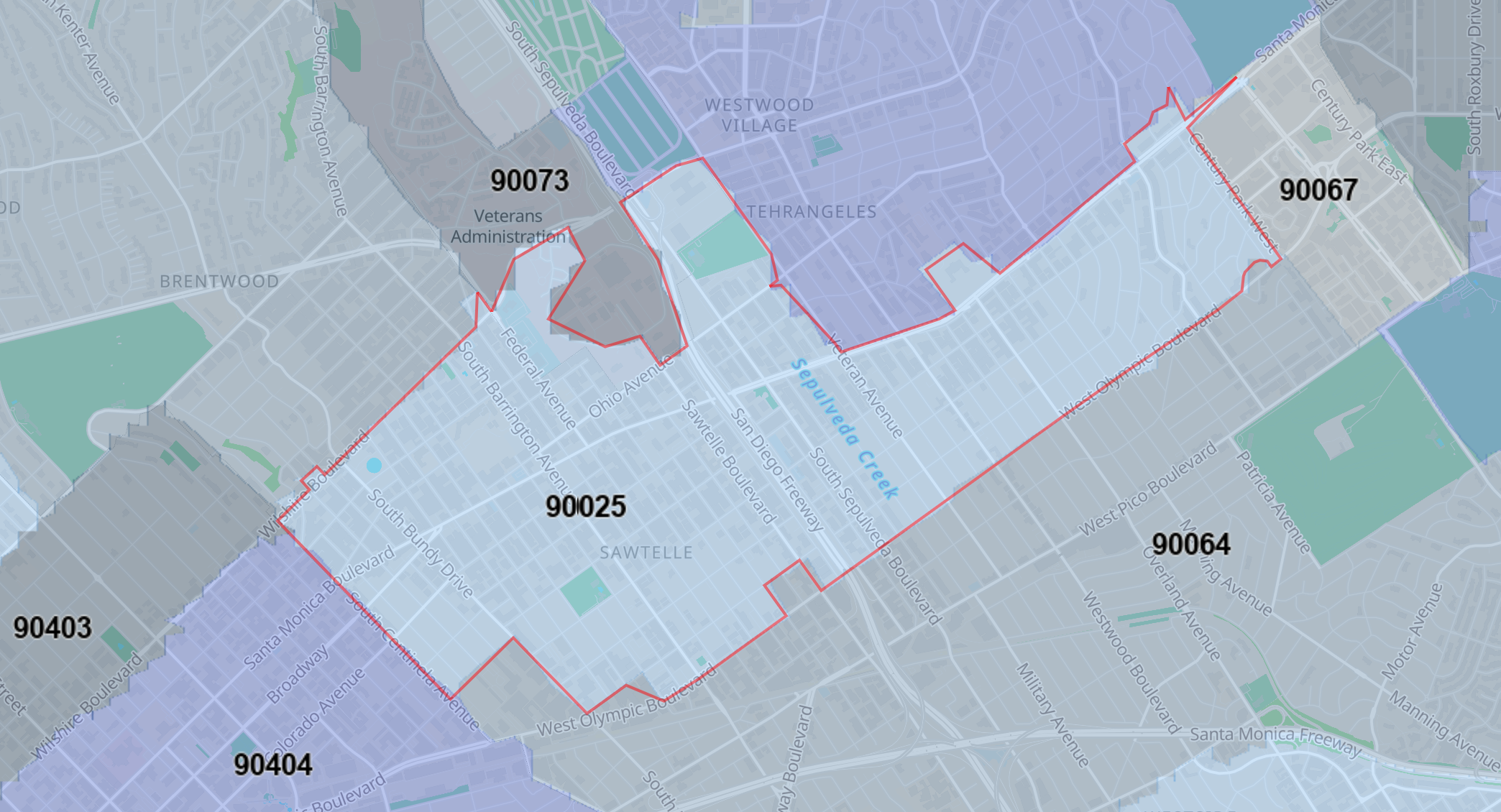
Sawtelle, Westwood, Century City, Santa Monica adjacency, Olympic Corridor, UCLA
proximity to UCLA and Westwood employment
Sawtelle retail and restaurant corridor
access to Century City and Santa Monica
strong long-term rental demand
limited multifamily inventory
consistent investor interest across multiple market cycles